
Photo By Elena Scherry
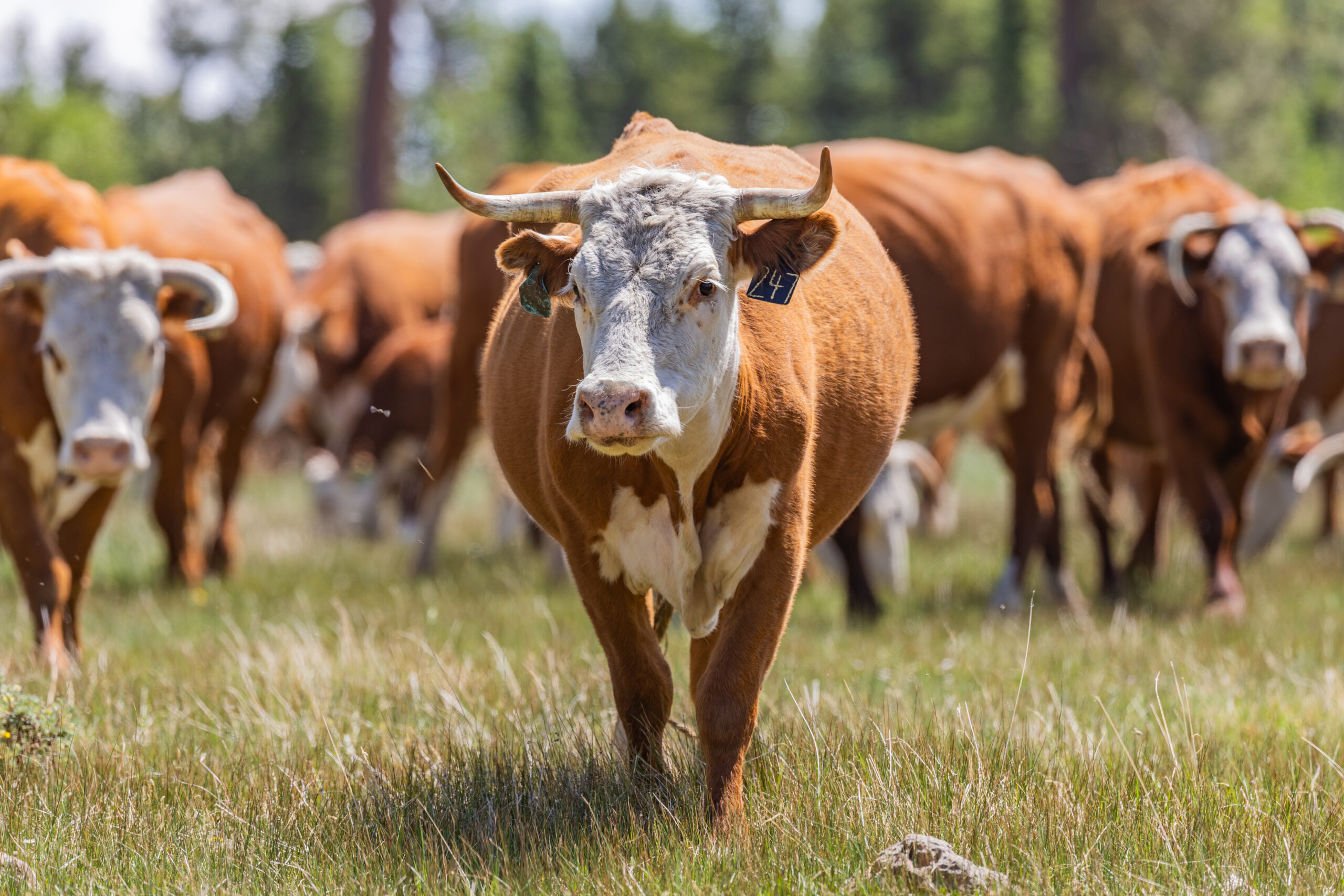
Photo By Erin Stahmer
Farming on the Ranch
By John Youngdale
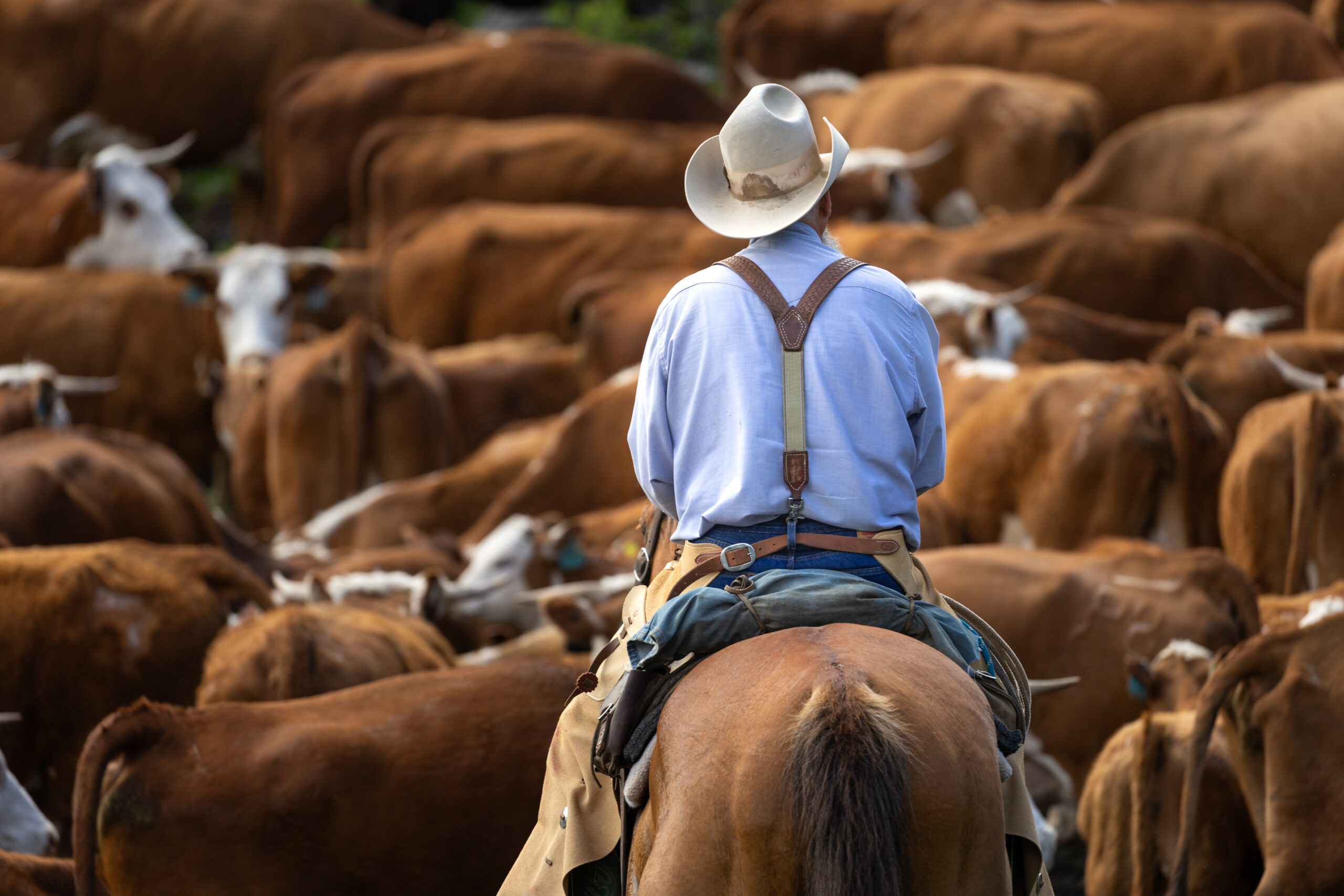
There is a reason Philmont is called a scout ranch and not a camp or reserve. One of the conditions Waite Phillips gave to Scouting America when he donated the land that would become Philmont was that the property had to remain a working cattle ranch.
On the ranch, you can find hundreds of cattle bearing the Philmont signature brand (Bar P crazy S). Philmont is “a commercial cow camp operation of about 225 head of mother cows,” said Dave Kenneke, Head of Ranching. Made up of “primarily Hereford cows that are very adapted to high elevation, being able to forage in the mountains.” In the fall, “we sell the steers, and the Heifers we don’t keep for replacement,” he said.
There are many other animals raised here on the property. At Abreu, a backcountry homesteading camp, staff raise chickens, goats, and burros in the same way the homesteaders of the early twentieth century did. Program Counselor Meghan Franks said having the animals there is beneficial for the program for the Scouts.
“I do think it’s important to have the animals here for the Scouts,” Franks said. “It shows them that the average homestead is pretty self-sufficient.”
Beyond the free eggs from the chickens and lawnmowing service from the burros, staff bond with their animals on a personal level.
“All of us have our own different connection with the animals,” Franks said. “I personally really like the chickens.”
The burros in the area “have been in this country dating back to early Spanish settlers and also used by the miners and prospectors of this country,” said Kenneke. “We do have a lot of paint burros, which are not as common in this region.”
Not found at any homesteading camps, Philmont’s ranching department oversees a herd of North American Bison that has lived on Philmont property since Waite Phillips owned it. The herd grew to roughly 100 bison after many gave birth to reddish-orange calves, which roam a 5,000-acre pasture.
Derived from three different herds, with origins across the National Bison Range, Wind Cave National Park, and Wichita Mountains NWR, according to the DNA Technologies Core Laboratory at Texas A&M University. Having lived here longer than the Scouts, the herd “dates back to Waite Phillips,” according to General Manager Andrea Watson.
“The bison have become something we are very proud of,” Kenneke said. The herd is not just famous but also a beautiful representation of the generations living on the ranch, as well as the rich history of wild bison in the West.